
Co-Creativity & Co-Creation
Co-Creativity & Co-Creation: Commons Practices in Action
The definitions are based among others on the work of Alexander Schmoelz and were further developed in collaboration with colleagues and students of the U!REKA Lab: Co-Creativity in Social Arts of the U!REKA European University by Raul Gschrey (Frankfurt UAS). This definition was compiled for the BIP Programm [COMMON GROUND] 2025 and will be developed further continously.
Co-Creation describes the method, the process or the result of a common creative process of different persons or groups, it is used as an umbrella term for (often creative) collaboration and collective decision making.
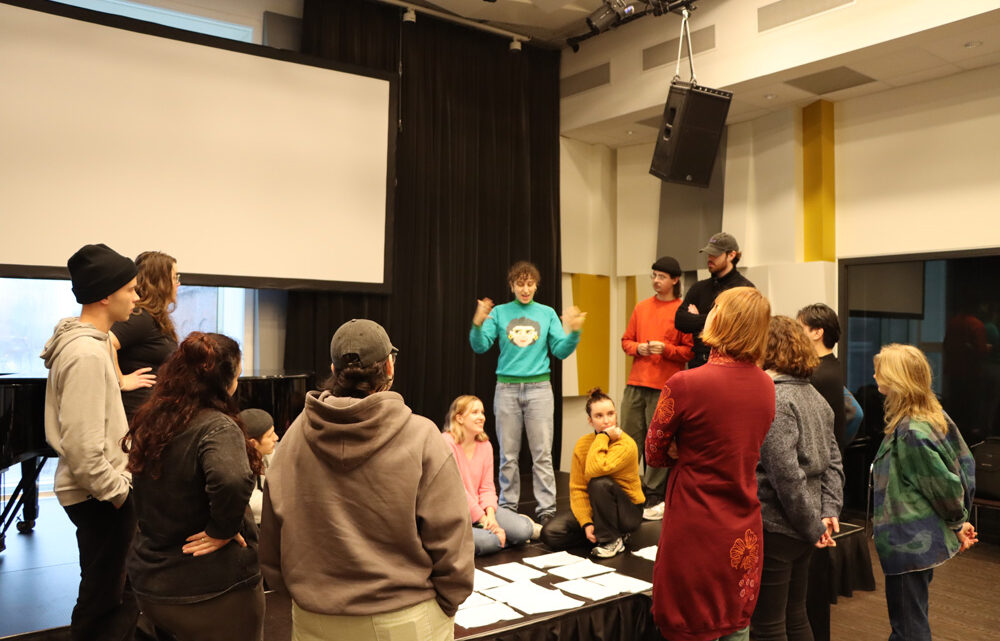
Co-Creativity focusses on the process of collective creative practice. It happens in and between individuals through individual, collaborative, and communal practice and evolves through collective thinking, dialogue, and shared positioning (Walsh, Craft & Chappell, 2016; Schmölz, 2017).
Co-Creativity is characterised through:
- Community & Impact: The collective development, exploration and enactment of new ideas with a focus on common(s) interest and community
- Dialogue: The co-development of questions, discussion of ideas and negotiating of (often conflicting) interests, coming to reasonable agreements and commonly accepted solutions and results
- Ownership: Careing for creative processes, valueing individual contributions and taking collective action leads to a feeling of responsibility and ownership for common processes and projects
- Co-Action: The involvement in co-creation may result in surprising individual or collaborative ideas and often leads to concrete actions. Aesthetic imagination, artistic creation and performative and embodied (re)enaction as alternative forms of knowledge creation are central to this collective creative practice
- Reflection: Phases of reflection of co-creative processes allow for an „experience of difference“ (Jäger & Kuckhermann, 2004) with relation to oneself, groups and others and strenghten critical thinking and the tolerance towards and exchange on ambigous standpoints
- Re-Postioning: Co-creative and aesthetic work disrupts the thinking and actions of oneself and others, and allows to move away from established routines and patterns to create new collective ideas and modes of action (Baacke, 2007)